A first aid kit usually gets attention right after a cut, burn, fever, or fall – then it gets pushed back into a drawer half empty. That is exactly why a practical guide to first aid restocking matters. When you need pain relief, bandages, antiseptic, or a thermometer, the right time to notice missing supplies is not during the emergency.
For most households, restocking first aid is less about building a perfect medical cabinet and more about staying ready for the common situations that happen every month. Kids scrape knees. Adults get headaches. Someone runs a fever late at night. A small burn happens in the kitchen. The goal is simple: keep basic care items available, unexpired, and easy to find.
Why a guide to first aid restocking saves time
Many homes already have first aid products, but they are spread across bathroom shelves, kitchen drawers, handbags, diaper bags, and travel pouches. That makes shopping uneven. You may buy another box of bandages while forgetting antiseptic cream or adhesive tape.
A restocking routine solves that. It helps you check what you actually use, what expires, and what should be kept in more than one place. It also reduces rushed last-minute purchases, which usually cost more and still leave gaps.
The other benefit is convenience. A single planned order is easier than buying one item today, another next week, and then realizing the thermometer battery is dead when someone is sick. Households that shop by category tend to stay better prepared because they treat first aid like any other recurring home essential.
Start with a quick home check
Before you buy anything, open every first aid storage spot in the house. That usually includes the main medicine box, kitchen cabinet, bathroom shelf, baby bag, car kit, and travel pouch. Put similar items together so you can see duplicates and shortages clearly.
Check for three things. First, look at quantity. A first aid kit with two remaining bandages is not really stocked. Second, check condition. If packaging is torn, wet, dusty, or damaged, replace it. Third, check expiration dates on ointments, pain relievers, allergy medicine, antiseptic solutions, and any child-specific medication.
This step does not need to take long. In most homes, 15 to 20 minutes is enough to spot what is missing. The point is not to create a clinic-level inventory. The point is to make sure everyday care items are present when needed.
What to keep in a basic household first aid kit
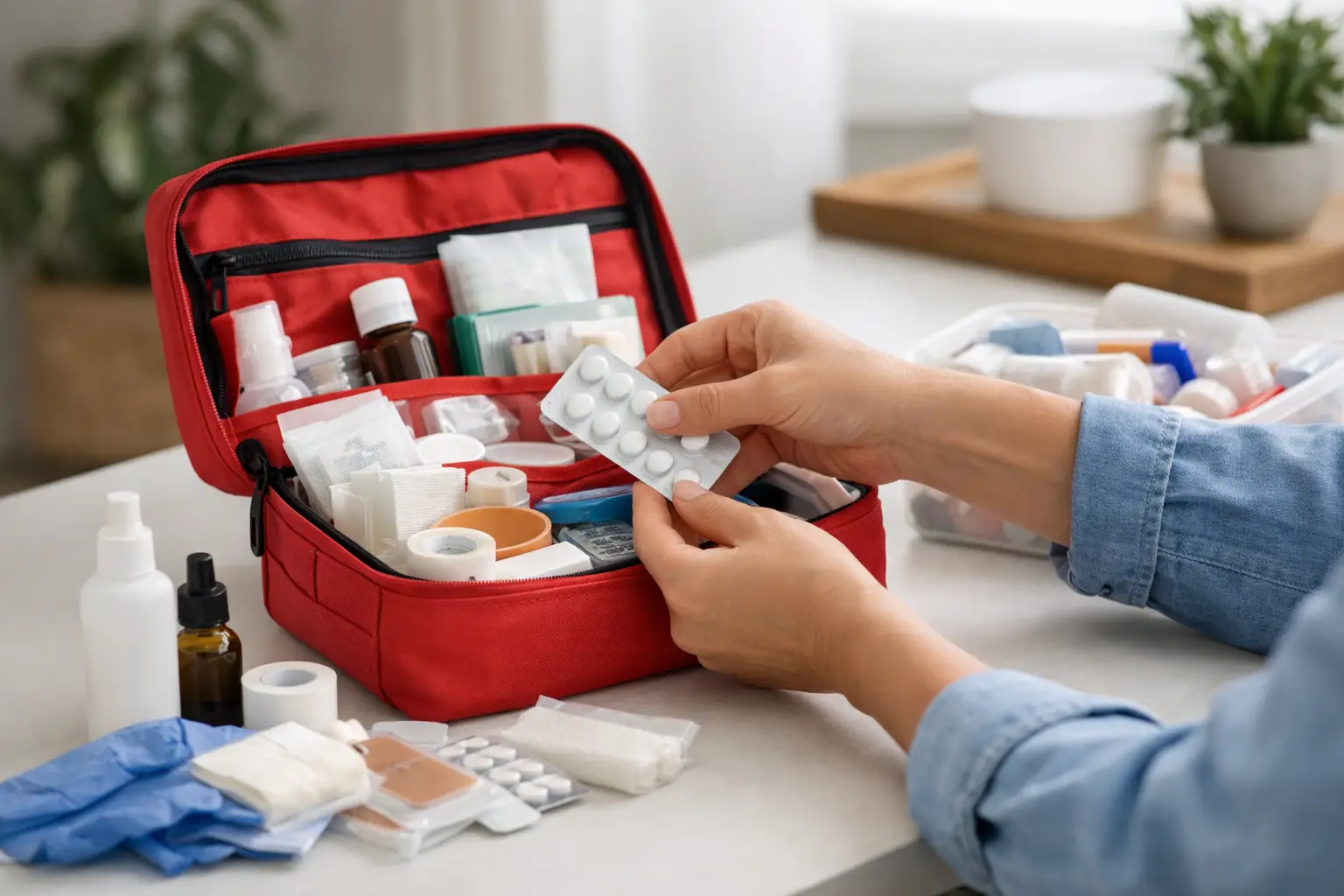
A useful kit covers minor cuts, scrapes, headaches, burns, fever, and basic home incidents. For most families, that means adhesive bandages in a few sizes, sterile gauze, medical tape, antiseptic liquid or wipes, antibiotic or antiseptic cream, cotton, disposable gloves, scissors, tweezers, and a digital thermometer.
You will usually also want pain and fever relief that fits your household, whether that is adult tablets, child-friendly liquid medicine, or both. If anyone in the home regularly uses allergy relief, keep that in a known location too. Burn cream, cold packs, and saline solution can also be worth adding depending on your family’s needs.
The exact mix depends on who lives in the home. A family with toddlers will use more bandages, fever medicine, and gentle skin care items. A home with older adults may prioritize blood pressure accessories, joint pain relief, or digestive medicine alongside first aid basics. If someone has a doctor-recommended medicine for a known condition, that should be monitored separately and never left to chance.
Restock based on use, not just on expiry
One common mistake is treating first aid restocking as something you do only when items expire. Expiration matters, but usage matters more in day-to-day life. If your family goes through adhesive bandages, antiseptic cream, cotton, and fever medicine regularly, those products should be checked more often than a rarely used elastic bandage.
A simple way to manage this is to divide products into fast-use and low-use items. Fast-use products should be reviewed monthly or whenever you place a routine household order. Low-use products can be checked every few months, as long as they remain sealed and in date.
This is where shopping habits help. If you already buy groceries, baby care, and personal care items on a recurring schedule, adding first aid replenishment to the same order keeps the process practical. Ajwa Super Mart fits that kind of routine shopping because households often need pharmacy essentials alongside daily use products.
Don’t ignore location and storage
Restocking is not only about what you buy. It is also about where you keep it. A well-stocked kit is less useful if nobody can find it quickly. Your main first aid kit should be in an easy-to-reach location known to everyone in the home, but still stored safely away from small children where needed.
Heat, moisture, and sunlight can shorten product life or damage packaging, so avoid keeping sensitive items in steamy bathrooms or hot cars for long periods. Travel and car kits are useful, but they need more frequent checking because temperature changes can be hard on medicines and creams.
If your home is larger or has multiple floors, one central kit may not be enough. In that case, keep a full household kit in one location and smaller backup kits in high-use areas. The smaller kits do not need to contain everything. They just need enough to handle the first few minutes of a minor incident.
A smart restocking plan for families
Families usually benefit from a repeatable system rather than occasional deep cleaning. The easiest approach is to tie first aid checks to another monthly task, such as grocery planning, pantry refills, or household essentials shopping.
Make a short checklist of your non-negotiable items. This might include bandages, gauze, antiseptic, thermometer use check, pain relief, child fever relief, gloves, and burn care. Keep that list near your medicine cabinet or in your phone. When something is opened, nearly finished, or expired, add it right away.
If you care for children, older adults, or someone with recurring health needs, it helps to keep a little extra stock of high-use items. That does not mean overbuying. It means avoiding the frustration of running out of basics on a weekend, late at night, or during bad weather when shopping is harder.
When to replace instead of top up
Some products are easy to top up, while others are better replaced completely. Open ointments that are old, sticky, separated, or close to expiration should be replaced. Adhesive products that no longer stick well are not worth saving. Thermometers with battery issues or inconsistent readings should be changed rather than trusted.
The same goes for first aid boxes that have become disorganized. If your kit is full of random wrappers, loose tablets, and half-used items with unreadable labels, rebuild it from scratch. A clean, clearly organized kit saves time and reduces mistakes.
Trade-offs matter here. Buying larger packs can be cost-effective for homes with frequent use, but it may lead to waste if products expire before they are used. Smaller packs may cost more per piece, but they can make better sense for low-use households or travel kits.
Guide to first aid restocking for travel and car kits
Your home kit should not do all the work. Travel pouches and car kits need their own checks because they are often used and forgotten. A basic portable kit should include bandages, gauze, antiseptic wipes, tape, pain relief, motion or nausea support if your family needs it, and any child-specific items relevant to your trips.
Keep portable kits compact and focused. There is no need to duplicate every home product. What matters is having enough for immediate care until you get home or reach proper medical help.
Check travel and car kits before road trips, school breaks, or family outings. This is especially important if you moved items out of the kit during the last trip and never replaced them. Portable kits fail most often because people assume they are still stocked.
Make restocking part of regular shopping
The easiest first aid kit to maintain is the one you check while doing your normal home shopping. If you already shop by household category, first aid products fit naturally beside pharmacy items, baby care, personal care, and cleaning supplies.
That approach keeps restocking from turning into a separate project. You notice low cotton, add it. Fever medicine is close to expiration, replace it. Bandages are down to a few strips, reorder before they run out. Small actions keep the kit ready without extra effort.
A stocked first aid kit does not need to be impressive. It just needs to be complete, current, and easy to reach. A few minutes of checking now can save a lot of stress later, and that is one household task worth staying ahead of.