Running out of dish soap right when the sink is full, or realizing you have no disinfectant left before guests arrive, is usually how most homes discover they are missing the basics. This guide to household cleaning essentials is built for everyday shoppers who want to stock smart, avoid last-minute gaps, and keep the home manageable without overbuying products they barely use.
A good cleaning setup does not mean filling a cabinet with dozens of specialty bottles. For most homes, the better approach is simple: keep a small group of reliable products that cover daily mess, weekly cleaning, and occasional deep-clean jobs. When you buy with that mindset, restocking gets easier, storage stays under control, and your regular grocery order works harder.
What belongs in a guide to household cleaning essentials
The easiest way to think about cleaning supplies is by task, not by marketing label. You need products for washing, disinfecting, degreasing, wiping, scrubbing, and freshening. Some items overlap, and that is where smart buying matters.
A dishwashing liquid, for example, can handle more than plates and pans. It helps with greasy stovetops, sink buildup, and quick spot-cleaning in many parts of the house. A disinfectant is different. It is useful when hygiene matters most, especially in bathrooms, on high-touch surfaces, and after illness. If you try to use one product for every job, cleaning often takes longer or gives weaker results.
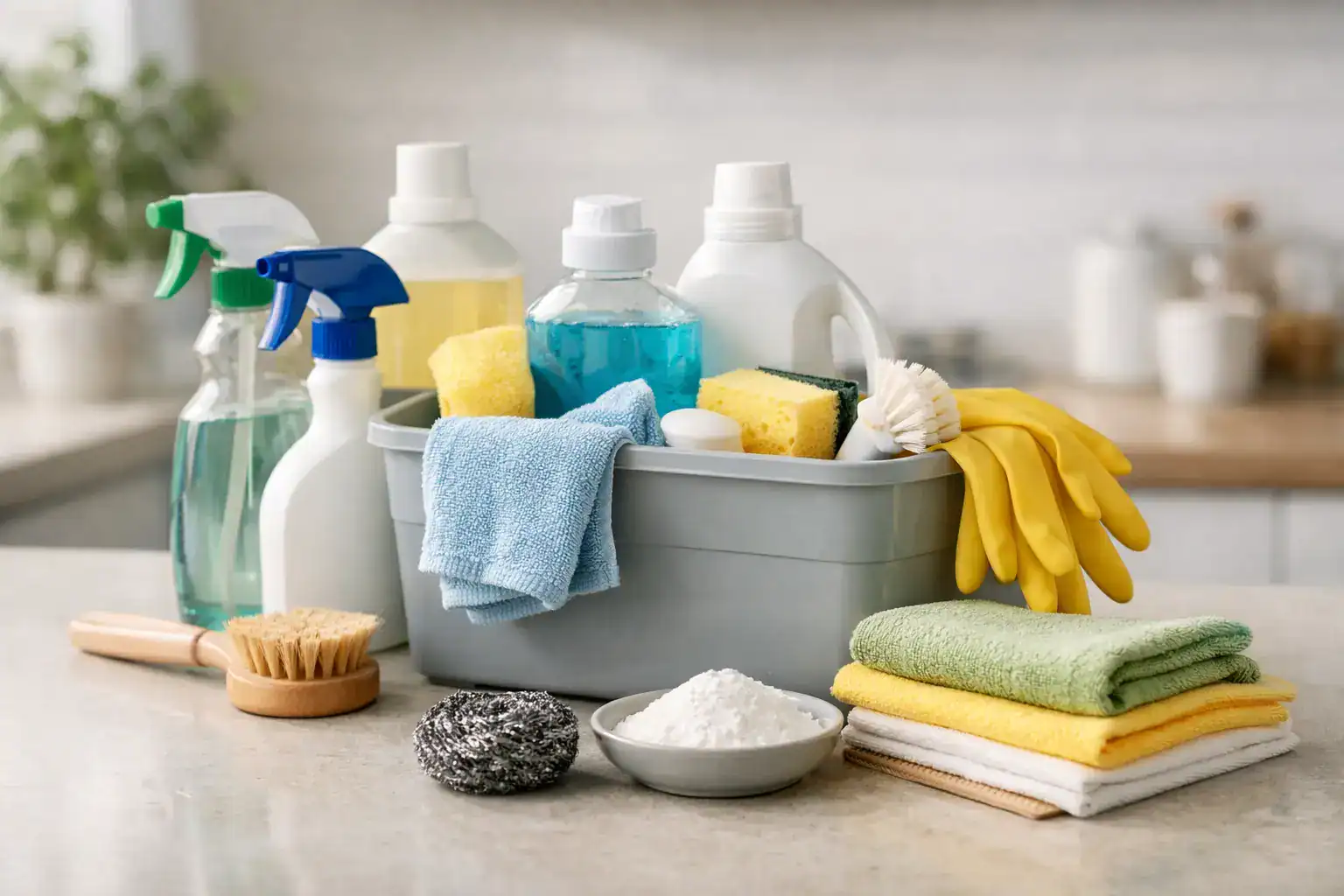
The core household set usually starts with dish soap, laundry detergent, surface cleaner, bathroom cleaner, disinfectant, floor cleaner, sponges, microfiber cloths, trash bags, and gloves. Beyond that, it depends on your home. Families with children may go through wipes and stain removers faster. Pet owners may need odor control and extra floor cleaning products. Smaller households may prefer concentrated multipurpose cleaners because they save space and reduce clutter.
Kitchen cleaning essentials that earn their shelf space
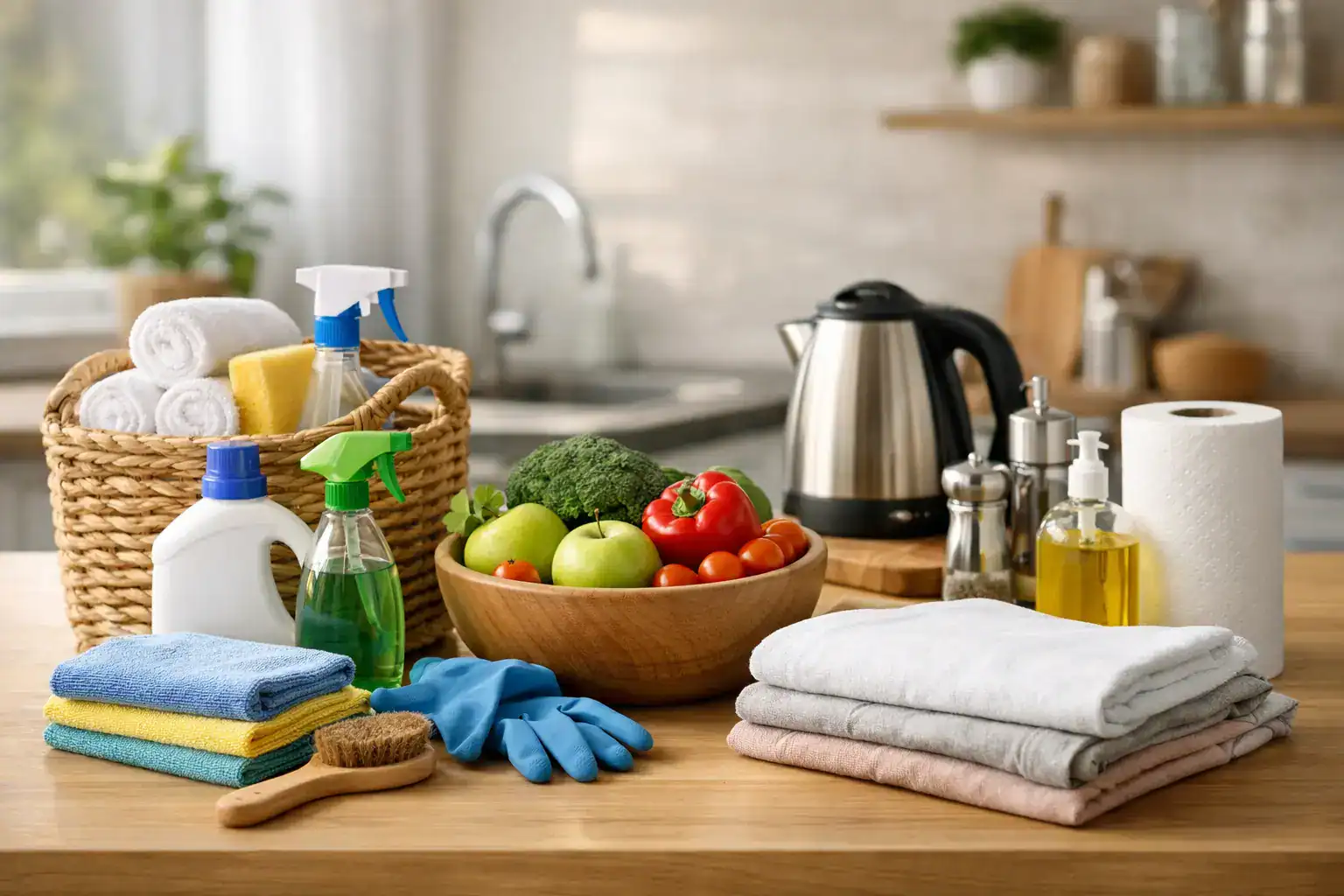
The kitchen creates the fastest turnover in cleaning supplies because it combines food spills, grease, moisture, and daily traffic. If you only stock one area properly, make it this one.
Dishwashing liquid is the first non-negotiable. Even homes with a dishwasher still need it for cookware, reusable bottles, and quick sink cleanups. A degreasing surface cleaner helps with counters, stovetops, cabinet fronts, and tiles where oil builds up gradually. If you cook often, this product saves time because regular all-purpose cleaners may struggle with heavy grease.
Sponges and scrub pads matter just as much as liquids. A weak sponge makes every task feel bigger. It helps to keep separate options for dishes and kitchen surfaces so you are not spreading food residue around the room. Microfiber cloths are useful for wiping counters and polishing appliances without leaving lint behind.
Trash bags are often overlooked until they run out. It is practical to keep the right size for your kitchen bin and at least one backup roll on hand. If your household cooks daily, odor-control bags can be worth the extra cost. If you generate less waste, standard bags may be enough.
Paper towels or cleaning wipes can also be useful, but this is one area where buying habits differ. Some households prefer reusable cloths to cut repeat spending. Others value the speed of disposable wipes for small children, raw meat prep areas, or quick after-dinner cleanups. It depends on how often you clean and how much convenience matters in your routine.
Bathroom cleaning essentials for hygiene and odor control
Bathrooms need a different approach because soap scum, water stains, toilet buildup, and bacteria are not the same kind of mess as kitchen grease. This is where using the right product saves effort.
A toilet cleaner is worth keeping because it is designed to cling to the bowl and break down buildup more effectively than a general spray. A bathroom cleaner or tile cleaner helps with sinks, taps, tubs, shower walls, and fittings. If hard water marks are common in your home, look for a formula that targets scale and residue.
Disinfectant is especially useful in this area. Door handles, flush buttons, faucet handles, and sink surrounds get touched constantly. If someone in the house is sick, these surfaces need more frequent cleaning. That does not mean every surface needs heavy disinfecting every day, but it is practical to have a product ready when hygiene becomes a priority.
A toilet brush, gloves, and dedicated bathroom cloths or scrubbers should also stay in this category. Keeping separate tools for the bathroom is a simple way to maintain hygiene without confusion.
Laundry and fabric care basics
Laundry products are household cleaning essentials even if they are stored away from the rest of your supplies. Clothes, bedding, towels, and uniforms create a steady cycle of washing, and using the wrong detergent or running out at the wrong time quickly affects the whole home.
Laundry detergent is the main item, but the right type depends on your household. Powder can be cost-effective for larger loads and routine washing. Liquid detergent is often better for pre-treating stains and dissolves well in quick washes. Pods are convenient, though usually less flexible if you want to adjust the amount for small or extra-dirty loads.
A stain remover is useful if your home deals with school clothes, office wear, sports gear, or food spills on a regular basis. Fabric softener is optional. Some people like the scent and feel, while others skip it for sensitive skin or to reduce extra spend. If budget matters, detergent plus a stain remover often gives better practical value than adding multiple laundry extras.
Floor and surface cleaning essentials
Floors collect everything – dust, crumbs, shoe marks, pet hair, and everyday traffic. The supplies you need depend a lot on surface type. Tile, laminate, vinyl, and wood-look flooring each respond differently to moisture and chemical strength.
A floor cleaner suited to your flooring is the safer choice than using a strong bathroom or kitchen cleaner everywhere. For many households, a basic multipurpose floor liquid paired with a mop and bucket handles most weekly cleaning. If your home has frequent foot traffic, it helps to keep a broom, dustpan, or surface dusting tool nearby for fast daily upkeep between deeper cleans.
An all-purpose cleaner earns its place here too. It works well for tables, shelves, switch plates, doors, and many hard surfaces throughout the house. This is one of the most practical products to buy regularly because it covers so many small jobs without needing a special bottle for each room.
How to shop this guide to household cleaning essentials without overspending
The biggest mistake is buying too many specialized products at once. A second mistake is buying the cheapest option in every category and then using more product because it performs poorly. The better balance is to identify your high-use items and spend according to usage.
Dish soap, laundry detergent, disinfectant, floor cleaner, and trash bags are usually worth prioritizing because they move quickly. Specialty products, like stainless steel polish or heavy oven cleaner, may only make sense if you actually use them often. If not, they can sit untouched for months.
Size also matters. Large packs often offer better value, but only if you have storage space and a household that goes through them at a steady pace. Smaller homes may be better off with moderate sizes that are easier to store and replace. Price-conscious shoppers can save more by watching discounts on repeat-use categories instead of filling the cart with low-rotation items that look useful but are rarely needed.
If you already place regular online orders for groceries and daily-use products, adding cleaning supplies to the same basket is often the easiest way to stay stocked. That is especially practical for bulky items like detergent, tissues, and trash bags that are annoying to buy in a rush.
A simple restock routine that works
Cleaning supplies are easier to manage when you stop treating them as separate from household shopping. Check your kitchen, bathroom, and laundry area once a week. Replace anything that is below one-third full if it is a high-use item. Keep one backup for your most-used basics, not for everything.
This approach prevents overstocking while reducing those frustrating moments when you need to clean and cannot. For many homes, the best setup is not the biggest one. It is the one that keeps daily cleaning realistic, affordable, and easy to maintain.
A well-stocked cleaning shelf should make home care feel simpler, not more complicated. Buy for the way your household actually lives, and the basics will do most of the work for you.