That moment when the toilet paper runs out right before guests arrive is exactly why it helps to know how to stock bathroom essentials properly. A well-stocked bathroom saves time, avoids last-minute store runs, and keeps daily routines moving without hassle. The goal is not to overbuy. It is to keep the right products on hand in the right amounts for your household.
For most homes, bathroom shopping gets split into two extremes. Either people buy too little and keep running out, or they buy too much of one thing and forget something basic like hand soap or toothpaste. A better approach is to treat the bathroom like any other high-use household zone. Stock it based on how many people use it, how often products run out, and how much storage space you actually have.
How to stock bathroom essentials without overbuying
The easiest way to start is by separating bathroom items into daily-use basics, personal care products, cleaning supplies, and backup items. This keeps your shopping list practical. It also helps you restock with purpose instead of tossing random products into the cart.
Daily-use basics are the items that nearly every household needs every week or every month. That usually includes toilet paper, hand soap, body wash, shampoo, conditioner, toothpaste, toothbrushes, and tissues. If your bathroom is used by family members and guests, you may also want facial tissues and an extra hand towel available at all times.
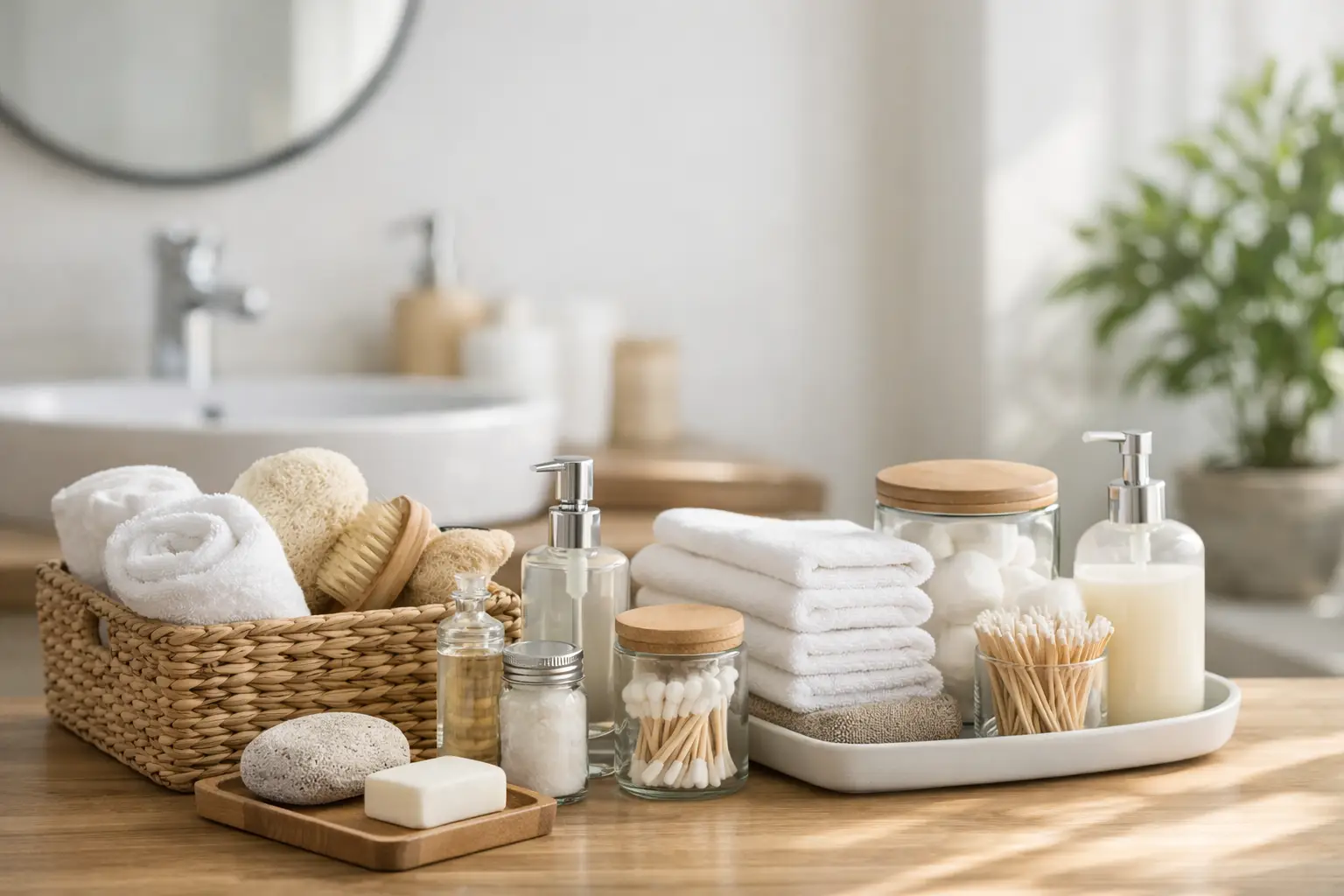
Personal care products depend more on the people in the home. Razors, shaving cream, sanitary pads, cotton swabs, cotton balls, mouthwash, floss, and skincare basics all fall into this group. These products are easy to forget because usage varies from person to person. That is why it helps to check them on a schedule instead of waiting until someone points out that the last pack is gone.
Cleaning supplies matter just as much as hygiene products. A bathroom may be stocked with soap and toiletries, but if you are out of toilet cleaner, disinfectant, sponges, or trash bags, the space stops feeling maintained. Keep a small but reliable set of bathroom cleaning items ready so regular cleaning does not get delayed.
Backup items are what protect you from inconvenience. One extra pack of toilet paper, one spare toothpaste, and one replacement hand soap can make a big difference. You do not need a stockroom. You just need enough reserve to cover the gap between orders.
Start with the bathrooms you actually have
Not every bathroom should be stocked the same way. A master bathroom, a kids’ bathroom, and a guest bathroom usually need different product levels.
In a primary bathroom, stock the full set of daily-use and personal care items. This is where most of your household consumption will happen. If two or more adults share the space, keep extras of the fastest-moving products, especially toilet paper, toothpaste, soap, and shampoo.
In a family bathroom used by kids, the focus should be convenience and frequency. Items may run out faster, and some products may need child-friendly options. It is worth keeping an extra toothbrush, a backup toothpaste, and easy-access tissues. If bath time happens there, body wash and shampoo will move faster too.
A guest bathroom does not need full bulk stocking, but it should never feel empty. Hand soap, toilet paper, tissues, and a clean hand towel are the minimum. A spare roll of toilet paper should always be visible or easy to find. If you host often, add a basic air freshener and keep the trash bin lined.
Buy based on usage, not guesswork
If you want a simpler system for how to stock bathroom essentials, track what runs out first for one month. You do not need a spreadsheet. Just pay attention to the products you replace most often.
A single adult household can usually manage with smaller quantities and more frequent top-ups. A family home needs larger packs and stronger backup planning. Homes with children often use more tissues, soap, and bath products. Households with frequent guests go through toilet paper and hand soap faster than expected.
It also depends on shopping habits. If you place one large household order every two to four weeks, your bathroom stock should cover that full period with a small margin. If you shop weekly, you can keep lower backup quantities. The key is matching purchase size to your routine, not copying someone else’s method.
This is where one-stop shopping makes life easier. When you can add personal care, home care, family basics, and fill-in items in one order, restocking becomes more consistent. Ajwa Super Mart fits naturally into that kind of routine because shoppers can combine bathroom supplies with regular household purchases instead of treating them as a separate errand.
Keep a simple bathroom essentials checklist
A good checklist should be short enough to use and complete enough to prevent missed items. For most homes, the core list includes:
- Toilet paper
- Hand soap
- Body wash or bar soap
- Shampoo and conditioner
- Toothpaste and toothbrushes
- Tissues
- Razors or shaving items
- Sanitary care products
- Cotton swabs or cotton balls
- Bathroom cleaner and disinfectant
- Toilet cleaner or bleach
- Sponges, wipes, or cleaning cloths
- Trash bags
- Air freshener if used
You may not need every item every time. That is fine. The point of the checklist is to help you scan the category quickly and avoid forgetting basics.
Store smart so products are easy to use
Even the best stock plan fails if products are hard to find. Bathrooms usually have limited storage, so organization matters. Keep active-use products within reach and backup items grouped together in one cabinet, basket, or shelf.
Avoid opening every new product right away. If three soaps are open at once, it becomes harder to tell what you actually need. Keep one in use and the rest sealed until needed. The same goes for toothpaste, tissues, and cleaning items.
If storage is tight, choose a leaner backup system. Instead of storing six months of supplies, keep one to two extra units of the basics and reorder regularly. Bigger quantities are useful only if you have the space and the household usage to justify them.
For shared bathrooms, place guest-friendly products where anyone can find them without asking. A visible tissue box, accessible hand soap, and clearly placed extra toilet paper make the room more functional right away.
Watch for the items people forget most
Most shoppers remember toilet paper. Fewer remember replacement toothbrushes, cotton products, or trash bags for the bathroom bin. Cleaning products are another common miss. People often think of the bathroom in terms of personal care but forget the supplies needed to keep the space clean.
It also helps to watch expiration and product condition. Old loofahs, worn toothbrushes, nearly empty pump bottles, and damaged soap trays all affect how the bathroom functions. Restocking is not only about quantity. It is also about replacing items at the right time.
Families should also think ahead for illness and minor emergencies. Keeping tissues, handwash, and basic hygiene supplies in reserve is practical. You do not need to turn the bathroom into a pharmacy cabinet, but a little planning goes a long way.
Set a restocking rhythm that fits real life
The easiest households to manage are not the ones with the most storage. They are the ones with a repeatable system. Check bathroom essentials before your main grocery or home care order. That takes far less time than making an emergency purchase later.
Some people prefer a weekly glance-and-fill method. Others do a larger restock once a month. Either can work. What matters is consistency. If your bathroom products are part of your routine shopping cycle, you are less likely to run out and less likely to overbuy.
A practical habit is to reorder when you open the last backup item, not when the main item is already finished. That gives you breathing room and keeps the bathroom running smoothly without clutter.
Knowing how to stock bathroom essentials is really about reducing friction in a part of the home everyone uses every day. When the basics are covered, the bathroom stays ready, your shopping gets easier, and one less part of household management turns into a last-minute problem.